


- Kane CLI now takes a requirement all the way to a ship-or-hold verdict, designing the tests, running them in a real browser, and emitting an open .evidence proof pack that teammates, AI agents, and auditors can all verify, with no server or dashboard requ
TestMu AI (https://cts.businesswire.com/ct/CT?id=smartlink&url=https%3A%2F%2Fwww.testmuai.com%2F%3Futm_source%3Dbusinesswire%26utm_medium%3Dpress_release%26utm_campaign%3Dbrand_awareness%26utm_term%3Dns%26utm_content%3Dboilerplate_2026_07&esheet=54575785&newsitemid=20260723455596&lan=en-US&anchor=TestMu+AI&index=1&md5=27c952bd8942a56dbb9fa6206b633e89) (formerly LambdaTest), the world’s first Agentic AI-powered Quality Engineering platform, introduced a source-to-verdict loop in Kane CLI (https://cts.businesswire.com/ct/CT?id=smartlink&url=https%3A%2F%2Fwww.testmuai.com%2Fblog%2Fkane-cli-from-prd-to-evidence%2F%3Futm_source%3Dbusinesswire%26utm_medium%3Dpress_release%26utm_campaign%3Dsource_to_verdict_for_kane_cli%26utm_term%3Dns%26utm_content%3Dsource_to_verdict_for_kane_cli_july&esheet=54575785&newsitemid=20260723455596&lan=en-US&anchor=source-to-verdict+loop+in+Kane+CLI&index=2&md5=d80c7443573073ed1b5b1a4478cde211), its natural-language testing tool. Building on Kane CLI’s evolution from a browser automation tool, the loop carries a product requirement to a ship decision, writing the tests, running them in the local browser, collecting the proof, measuring coverage from what actually happened, and returning a verdict.
As AI agents write, run, and fix tests, a green checkmark is no longer enough: a step that checks nothing passes, a test written against a spec that changed weeks ago passes, and an agent that says “done” without the click ever landing passes. Empty green and earned green are the same color on every dashboard, the number climbs while the risk does not move. Kane CLI closes that gap: it carries a requirement to a verdict, and proves every step of it.
One loop. Source to verdict.
You no longer hand Kane CLI a test script, you hand it your requirements. Nine stages form one traceable line:
Source → Business use case → Scenario → Acceptance criteria → test.md → Execution → Evidence → Coverage → Verdict
The first half is the AI doing the test-engineering; the second half is the proof. The number at the end is read off the machine, never typed, never assumed.
· Ingest anything. Point Kane CLI at a PRD, Jira ticket, Confluence spec, Figma frame, or demo video and it pulls them into context — no other tool takes a Figma node or an mp4 as a requirement source.
· AI designs the tests, and asks when it should. It extracts business use cases, breaks each into scenarios, and pins every scenario to acceptance criteria. When two sources disagree, it stops and asks which is current, rather than guessing.
· Tests you can read, carrying their own coverage map. The output is test.md: plain Markdown a human can edit, where every step declares which criterion it proves. Traceability is built in, not a spreadsheet beside the tests.
· Deterministic execution in a real browser. Authoring is loose and intent-based; execution replays a recorded run with no LLM in the loop, so it behaves the same every time. Autoheal kicks in only when the product has genuinely drifted, and flows can run past 50 steps.
· One .evidence pack per run. Not a screenshot and a log, but the whole run: the agent’s trajectory, the network as a HAR, the DOM where things diverged, the console, the video, and a root-cause writeup of any failure. It opens as a page with levels — L0 minimal, L1 coverage and quality signals, L3 signing, attestation, and per-file hashes.
· Three scores behind every tick. Evidence-backed (was the pass real), legitimacy (did the agent really do it — a no-op click reads legit:false), and determinism (does it reproduce).
· A coverage number allowed to fall. Coverage is computed from the pack, not asserted by the tool that ran it. Strict mode demotes tests that passed against a since-changed spec — a percentage that can fall is the only kind you can trust when it rises.
· Then someone signs. Coverage, confidence, uncovered criteria, and stale sources roll up into one verdict, ship or hold, posted as a required check on the pull request, with the evidence link attached. The machine brings the proof; a person makes the call.
“Software now ships with agents in the loop, writing tests, running them, fixing what breaks. A green checkmark was built for a world where a person read every line; it was never built to survive an agent in that loop. Kane CLI carries a requirement all the way to a ship decision and shows its working, a record a teammate, an agent, and an auditor can all act on,” said Mudit Singh, Co-Founder and Head of Growth at TestMu AI.
.evidence is open. The pack is not locked inside a dashboard, it is plain YAML and Markdown, versioned, diffable in git, and readable by people, agents, and auditors. Teams can adopt it without adopting Kane CLI itself, and packs project to CI formats such as CTRF and JUnit. Think of it as the PDF of test evidence.
About TestMu AI
TestMu AI (formerly LambdaTest) is the world’s first Agentic AI-powered Quality Engineering platform, helping teams build, test, and release software with confidence in an AI-first era by combining autonomous testing capabilities with real-world validation. For more information, visit www.testmuai.com.
View source version on businesswire.com: https://www.businesswire.com/news/home/20260723455596/en/
언론연락처: TestMu AI Nikhil Saxena Corporate Communication Manager +91 9870981968
이 뉴스는 기업·기관·단체가 뉴스와이어를 통해 배포한 보도자료입니다.
As AI agents write, run, and fix tests, a green checkmark is no longer enough: a step that checks nothing passes, a test written against a spec that changed weeks ago passes, and an agent that says “done” without the click ever landing passes. Empty green and earned green are the same color on every dashboard, the number climbs while the risk does not move. Kane CLI closes that gap: it carries a requirement to a verdict, and proves every step of it.
One loop. Source to verdict.
You no longer hand Kane CLI a test script, you hand it your requirements. Nine stages form one traceable line:
Source → Business use case → Scenario → Acceptance criteria → test.md → Execution → Evidence → Coverage → Verdict
The first half is the AI doing the test-engineering; the second half is the proof. The number at the end is read off the machine, never typed, never assumed.
· Ingest anything. Point Kane CLI at a PRD, Jira ticket, Confluence spec, Figma frame, or demo video and it pulls them into context — no other tool takes a Figma node or an mp4 as a requirement source.
· AI designs the tests, and asks when it should. It extracts business use cases, breaks each into scenarios, and pins every scenario to acceptance criteria. When two sources disagree, it stops and asks which is current, rather than guessing.
· Tests you can read, carrying their own coverage map. The output is test.md: plain Markdown a human can edit, where every step declares which criterion it proves. Traceability is built in, not a spreadsheet beside the tests.
· Deterministic execution in a real browser. Authoring is loose and intent-based; execution replays a recorded run with no LLM in the loop, so it behaves the same every time. Autoheal kicks in only when the product has genuinely drifted, and flows can run past 50 steps.
· One .evidence pack per run. Not a screenshot and a log, but the whole run: the agent’s trajectory, the network as a HAR, the DOM where things diverged, the console, the video, and a root-cause writeup of any failure. It opens as a page with levels — L0 minimal, L1 coverage and quality signals, L3 signing, attestation, and per-file hashes.
· Three scores behind every tick. Evidence-backed (was the pass real), legitimacy (did the agent really do it — a no-op click reads legit:false), and determinism (does it reproduce).
· A coverage number allowed to fall. Coverage is computed from the pack, not asserted by the tool that ran it. Strict mode demotes tests that passed against a since-changed spec — a percentage that can fall is the only kind you can trust when it rises.
· Then someone signs. Coverage, confidence, uncovered criteria, and stale sources roll up into one verdict, ship or hold, posted as a required check on the pull request, with the evidence link attached. The machine brings the proof; a person makes the call.
“Software now ships with agents in the loop, writing tests, running them, fixing what breaks. A green checkmark was built for a world where a person read every line; it was never built to survive an agent in that loop. Kane CLI carries a requirement all the way to a ship decision and shows its working, a record a teammate, an agent, and an auditor can all act on,” said Mudit Singh, Co-Founder and Head of Growth at TestMu AI.
.evidence is open. The pack is not locked inside a dashboard, it is plain YAML and Markdown, versioned, diffable in git, and readable by people, agents, and auditors. Teams can adopt it without adopting Kane CLI itself, and packs project to CI formats such as CTRF and JUnit. Think of it as the PDF of test evidence.
About TestMu AI
TestMu AI (formerly LambdaTest) is the world’s first Agentic AI-powered Quality Engineering platform, helping teams build, test, and release software with confidence in an AI-first era by combining autonomous testing capabilities with real-world validation. For more information, visit www.testmuai.com.
View source version on businesswire.com: https://www.businesswire.com/news/home/20260723455596/en/
언론연락처: TestMu AI Nikhil Saxena Corporate Communication Manager +91 9870981968
이 뉴스는 기업·기관·단체가 뉴스와이어를 통해 배포한 보도자료입니다.
ⓒ 주식회사 에이아이크리에이티브랩 & www.aifilmjournal.com 무단전재-재배포금지
BEST 뉴스
-

Esri to Debut the Power of Where Collection at 2026 Esri User Conference
Esri (https://www.esri.com/en-us/what-is-gis/overview), the global leader in location intelligence, will debut the Power of Where Collection (https://powerofwhere.com/?aduc=Public_Relations&aduca=2026-MUL-Esri_Press_Books&aduco=press-release&adum=Press_Release&adut=pow-series&... -
Statement on Terminating the Letter of Intent With AI Financial Corporation
Statement from Matthew Nicoletti, Chief Strategy Officer, Perpetuals.com (Nasdaq: PDC), on the proposed transaction with AI Financial Corporation. “Perpetuals has decided not to further pursue the acquisition of AI Financial Corporation’s subsidiary Alt5 Sigma Canada, Inc. and the earlier letter... -

디자인 툴 필요없다… 비즈뿌리오, 알림톡 전용 ‘이미지 메이커’ 출시
비즈뿌리오 ‘이미지 메이커’ 기능 출시 기업 메시징 서비스 비즈뿌리오를 운영하는 다우기술(대표 김윤덕)은 카카오톡 알림톡에 포함되는 이미지를 손쉽게 완성할 수 있는 ‘이미지 메이커’ 기능을 지난 1일 출시했다고 밝혔다. 최근 카카오톡 알림톡은 단순 텍스트 형태를 넘어 브랜드 로... -
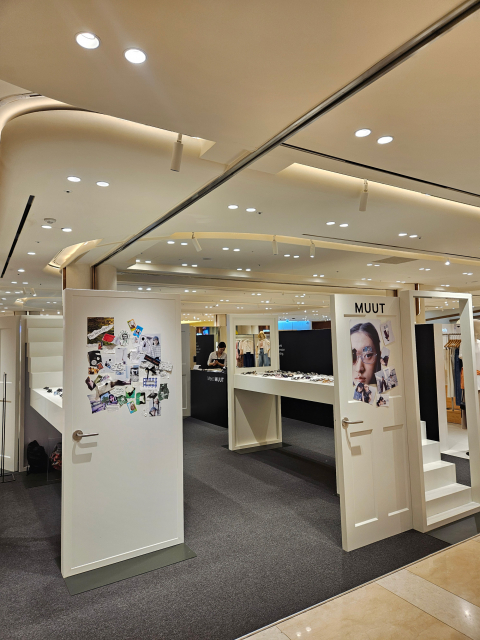
MUUT, 신세계 강남점 입성… 롯데 잠실 이어 팝업 확대
신세계 강남 MUUT 팝업 전경 패션 아이웨어 브랜드 뭍(MUUT)이 7월 9일부터 22일까지 신세계백화점 강남점 5층 팝업 스테이지에서 팝업 스토어를 운영한다. 이번 팝업은 MUUT의 다양한 아이웨어 제품과 브랜드가 제안하는 스타일을 직접 경험할 수 있는 공간으로 꾸며졌다. 롯데월드몰 잠... -
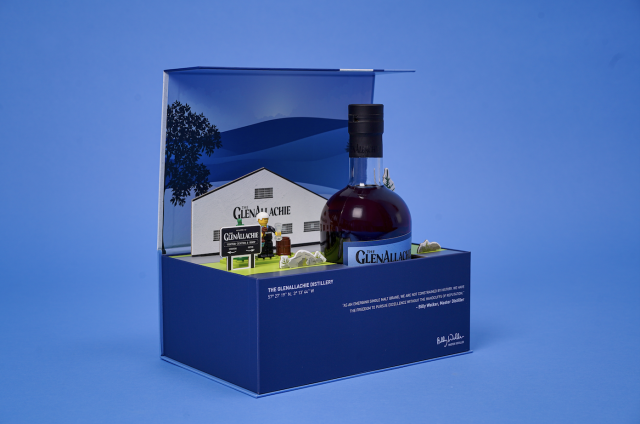
글렌알라키 ‘15년 컬렉터스 에디션 PART I’으로 JPM 어워즈 금상 수상
글렌알라키 15년 컬렉터스 에디션 파트 1 프리미엄 주류 수입 유통사 메타베브코리아는 자사의 대표 싱글몰트 위스키 브랜드인 글렌알라키의 한정판 패키지 ‘글렌알라키 15년 컬렉터스 에디션 PART I’이 일본 마케팅 업계 최고 권위의 시상식인 ‘제54회 Japan Promotional Marketing Award... -
소비자는 부담 덜고, 어가는 판로 확대… GS더프레시 ‘ESG 장어덮밥’ 출시
GS리테일이 운영하는 슈퍼마켓 GS더프레시는 국내산 민물장어 소비 촉진을 위해 ‘국내산 통한마리장어덮밥’을 출시한다고 14일 밝혔다. 이번 상품은 GS더프레시가 한국어촌어항공단, 해양수산부와 함께 추진하는 ‘Co:어촌 프로젝트’ 일환으로 기획됐다. Co:어촌 프로젝트는 기업의 상품 개발·유통 역량과 국내 어가의 ...
전체댓글 0
NEWS TOP 5

실시간뉴스


추천뉴스




포토뉴스
more +-
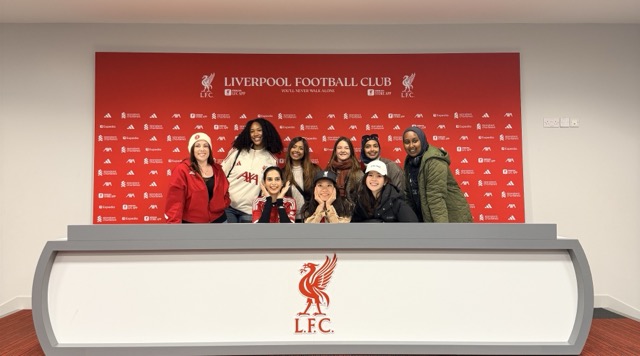
노매드헐, 일본항공과 손잡고 리버풀 FC 우먼 경기에서 여성 스포츠 임파워먼트 축하 행사 개최
전 세계 60만 글로벌 여성 여행자 커뮤니티 앱 노매드헐(NomadHer)이 일본항공(Japan Airlines, 이하 JAL)과 공식 파트너십을 맺고 여성 스포츠의 활기찬 정신을 기념하는 특별 협업 프로젝트를 진행했다고 밝혔다. 이번 협업을 통해 노매드헐 커뮤니티 회원들이 한자리에 모여 리버풀 FC 우먼(... -

KYMF대한민국청소년미디어대전, 9월 18일까지 작품 공모
시립청소년미디어센터는 국내 최대 규모의 청소년 미디어 축제인 ‘2026 제26회 KYMF대한민국청소년미디어대전’(이하 미디어대전)의 작품을 오는 8월 1일부터 9월 18일 오후 6시까지 공식 누리집(https://kymf.ssro.net)을 통해 공모한다. 서울특별시가 주최하고 시립청소년미디어센터가 주관하... -

라이온코리아, 여름철 빨래 냄새 특화 ‘비트 몬스터 팟 10X냄새케어’ 이마트서 1+1 행사
건강한 생활 습관을 만드는 기업 라이온코리아가 고온다습한 날씨로 실내건조가 많아지는 여름철을 맞아, 전국 이마트에서 하이브리드 캡슐세제 ‘비트 몬스터 팟 10X냄새케어’의 1+1 행사를 진행한다. 라이온코리아는 실내건조에 특화된 ‘비트 몬스터 팟 10X냄새케어’의 접근성을 높이고 소비자... -

이너스커뮤니티, 오뚜기 진라면 서포터즈 ‘진앤지니’ 18기 발대식 성료… 12년째 이어온 ‘팬덤’ 마케팅
하이브리드 브랜딩 기업 이너스커뮤니티(INUSCommunity)가 기획·운영하는 오뚜기 대학생 진라면 서포터즈 ‘진앤지니’ 18기가 지난 7월 6일 오뚜기라면 공장에서 발대식을 열고 공식 활동을 시작했다. ‘진앤지니’는 2012년 첫 기수를 시작으로 올해 18기를 맞은 국내 대표 장수 서포터즈 프로그...